
Another bold Belgian pioneer: Koffies De Draak has decided to transition to Steward Ownership
Since 1864, Koffies De Draak has stood for outstanding coffee craftsmanship and a deep respect for people and nature. Now, Elisabeth Scheerlinck and her family are taking a bold step: embedding those values permanently into the company's legal DNA through steward ownership.
Another bold Belgian pioneer has chosen steward ownership. Koffies De Draak — a Ghent coffee roaster with more than 150 years of history — has decided to transition to steward ownership, joining a growing movement of companies choosing to embed independence and purpose orientation into their legal structure.
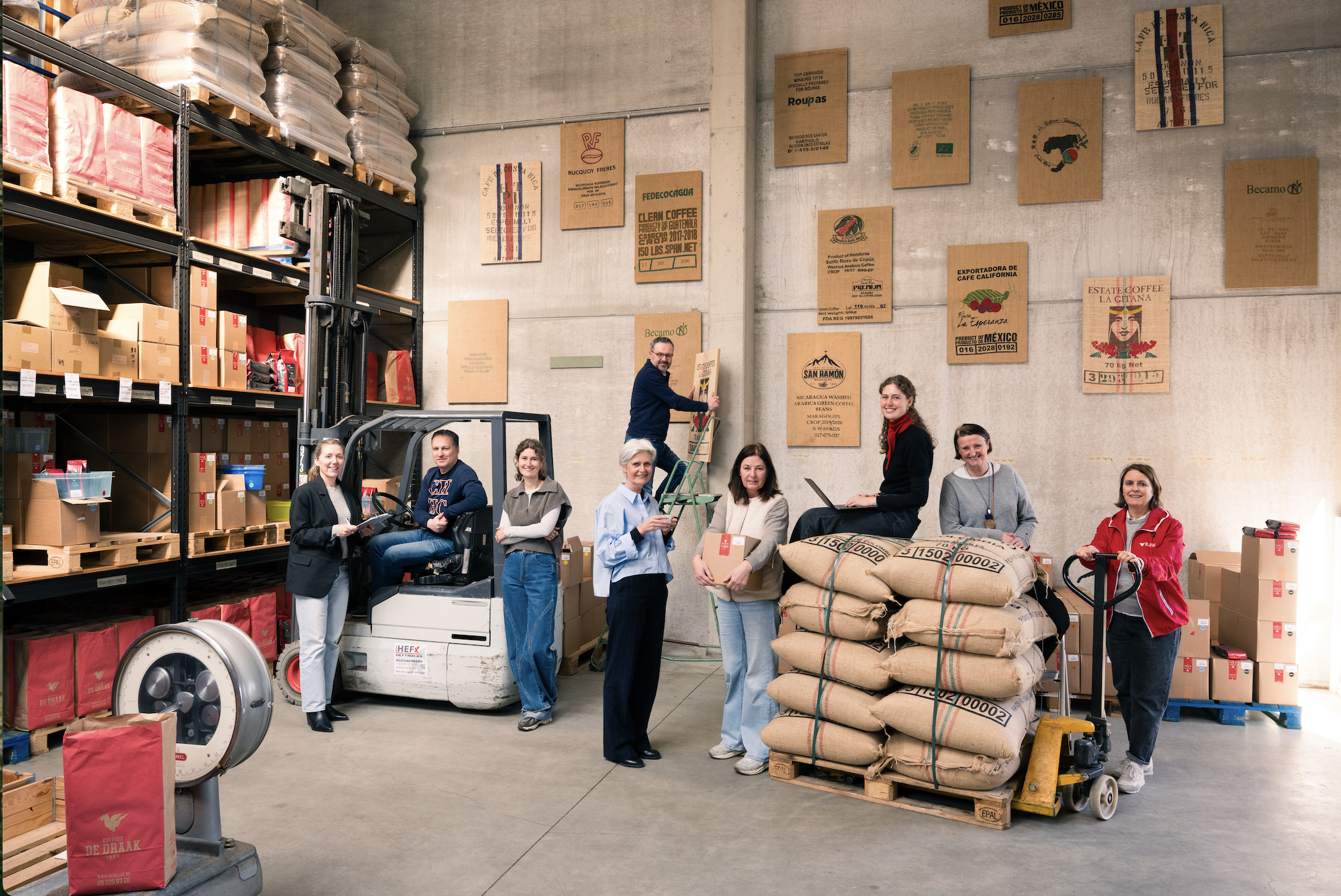
For more than a century and a half, Koffies De Draak has selected coffee beans from some of the world's finest plantations, with great attention to ecologically responsible cultivation. Respect for people and nature remains central. Through a strong socio-ecological commitment, the owners have long pursued transparency, fairness, simplicity, and quality.
It is exactly these values — and this long-term orientation — that Elisabeth Scheerlinck and her family now want to safeguard for the future.
What steward ownership means
Steward ownership is built around two core principles:
1. Control stays in the hands of people closely connected to the company — those who are involved, aligned with the mission, and deeply embedded in its stakeholder community.
2. Profits primarily serve the purpose and continuity of the business, rather than enabling private extraction by outside investors.
A story rooted in Ghent
The story of Koffies De Draak began on the foundations of the now-vanished monastery of the Poor Clares in Ghent. Many generations later, the company still proudly carries its Ghent roots.
The company's name and logo are drawn from the gilded dragon that once adorned the bow of Norwegian crusader Sigurd Magnusson's ship — and later arrived in Ghent as war booty. In 1382, it was placed atop the city's Belfry as a symbol of Ghent's freedom.
With this transition to steward ownership, that spirit can now continue to live on. Not necessarily through bloodlines, nor through the logic of money — but through a mechanism where engaged steward-owners hold the steering wheel.
“With this transition to steward ownership, that spirit can now continue to live on. Not necessarily through bloodlines, nor through the logic of money — but through a mechanism where engaged steward-owners hold the steering wheel.”
A third pathway for succession
Steward ownership is proving to be a powerful third pathway for business succession. It offers an alternative to either selling the company outright or passing it on solely through inheritance. Instead, it introduces a third logic: responsibility based on ability and alignment.
For many Belgian family businesses, the question of succession is becoming increasingly urgent. More and more entrepreneurs are looking for alternatives that allow their life's work to remain independent, purpose-driven, and rooted in its community across generations.
Koffies De Draak's decision reflects a broader momentum in Belgium. In 2026 alone, eight Belgian companies have chosen to become steward-owned — a wave that signals growing awareness that ownership structure deeply shapes the future of a business: who makes decisions, how value is created, and who ultimately benefits.
May this become an inspiring step for a new generation of entrepreneurial succession and ownership models in Belgium.