Can Purpose survive any owner?
Everlane, Shein, and the question of Ownership
When purpose-driven brands meet financial gravity
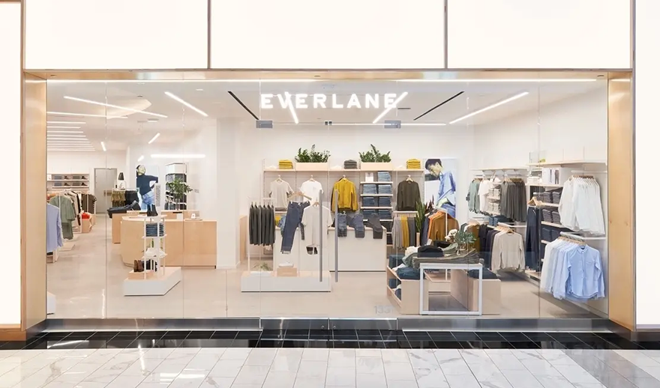
Everlane once was like a synonym for a new generation of fashion brands. “Radical Transparency” was not just a slogan, but a way of relating to customers, suppliers, and the production process. The company built trust by making sustainability, ethical sourcing part of its identity. Everlane became a darling of the conscious consumer and an example of the DTC (Direct to Consumer) 1.0 era when it was founded in 2010 in San Francisco
That is precisely why the recent acquisition of Everlane by ultra-fast-fashion giant SHEIN feels so symbolically significant. It reads like a cautionary tale about the gap between brand values and business reality…
The contrast between both companies could hardly be sharper. On one side stands a brand associated with ethical basics and transparency. On the other, a company repeatedly criticized for disposable fashion, overconsumption, and a lack of sustainability standards.
The question is therefore not only whether these two brands can coexist under one ownership structure. The deeper question is whether values can remain durable when the ownership logic surrounding a company fundamentally changes.
Ownership shapes outcomes
Cases like Everlane reveal something broader about the structure of modern business.
Many purpose-oriented companies begin with genuine intentions. Their purpose is real. Their values are real. But over time, they become exposed to financial extraction, debt pressure, liquidity expectations, or shareholder maximization. At precisely the moments where purpose needs protection most, ownership structures can pull companies in another direction.
This is perhaps the most explicit moment in Everlane’s history where the risk becomes highest that the company will be treated primarily as a transferable financial asset, rather than as an independent organization stewarding a long-term purpose. Because ownership directly shapes who makes decisions, how value is created, and who ultimately benefits from it.
Buying more than a fashion brand
SHEIN likely did not acquire Everlane solely for product innovation. It acquired something far more difficult to build quickly: legitimacy, trust, customer relationships, and narrative capital.
Everlane spent more than a decade building a strong ethical brand identity. That reputation became part of the company’s value.
And perhaps that is what makes this acquisition feel uncomfortable for many observers. Consumers often assume that a company’s values are embedded in its branding. In reality, those values are frequently only as durable as the ownership structure beneath them.
Even though Everlane’s leadership has publicly emphasized that the company will remain committed to sustainability and continue operating independently, the acquisition still raises difficult questions about long-term alignment.
Coincidentally (and cynically) Everlane’s current summer collection is called "Destination Elsewhere". That phrase suddenly gains another layer...
The hidden vulnerability of mission-driven companies
This is not only an Everlane story.
Increasingly, mission-driven brands face the gravitational pull of conventional capital markets:
sustainable brands pushed toward hyper-growth
ethical positioning diluted under investor expectations
long-term purpose becoming vulnerable when profitability weakens
And in this case, another painful layer reportedly sits beneath the surface: much of the transaction value may have been absorbed by roughly $90 million in debt obligations. If accurate, the acquisition resembles less a celebrated exit and more a distressed transfer of ownership.
The people who built the company’s credibility, mission, and culture may ultimately have had little say over where the company ended up.
And they are far from the first founders to find themselves in that position
Why ownership matter
This is exactly where conversations about Steward ownership become increasingly relevant.
Steward ownership starts from 2 core principles: self-determination and purpose orientation. The company remains guided by people closely connected to its mission, while profits become a means to support the company’s purpose rather than an end in themselves.
In practice, this often means limiting certain freedoms (such as speculative selling or unlimited extraction) in order to protect others.
long-term independence
purpose integrity
self-determination
continuity across generations
Not because Steward ownership creates “perfect companies,” but because it attempts to structurally anchor purpose into the DNA of a business itself.
Many mission-driven brands that were ultimately lost simply didn’t choose it in time. Everlane didn't either. The brands that will be standing in a decade, are the ones who are rethinking ownership the coming months and years.
A broader question for the future of business
Perhaps Everlane’s story is ultimately not just about fashion.
Not just about impact.
Not just about David versus Goliath.
It is about what happens when purpose-driven companies operate inside systems that were never truly designed to protect purpose over time.
The acquisition does not erase what Everlane once represented. But it does remind us that purpose alone is often not enough. Without ownership structures capable of safeguarding long-term mission alignment, even the strongest brand narratives can eventually become vulnerable to financial gravity.
And maybe that is the real conversation this moment invites us to have.
So the answer is probably: NO.
Purpose cannot survive just any owner.
At least, that’s our assumption..