
Who owns Pukkelpop?
Who owns Pukkelpop will ultimately determine what remains.
The acquisition of Pukkelpop by Live Nation is somewhat reminiscent of what once happened to Ben & Jerry's when it came into the hands of Unilever: lots of big promises and measures to guarantee its independence... until it ultimately came down to money = power and steering toward shareholder value... and the soul was lost.
🤔 That's exactly why the structure announced today is not at all reassuring to us when it comes to Pukkelpop's independence, autonomy and the preservation of founder Chokri's vision... in the long term.
Because here too, albeit with some delay, ownership ultimately ends up in the hands of Live Nation.
Is that really so bad?
Well...
Yes!
We rarely ask questions about ownership.
And yet it quietly shapes... everything.
Who holds power, how decisions are made, what gets priority, and ultimately what endures.
...and therefore also how, little by little, the soul, local roots and uniqueness of a company or festival can wither away.
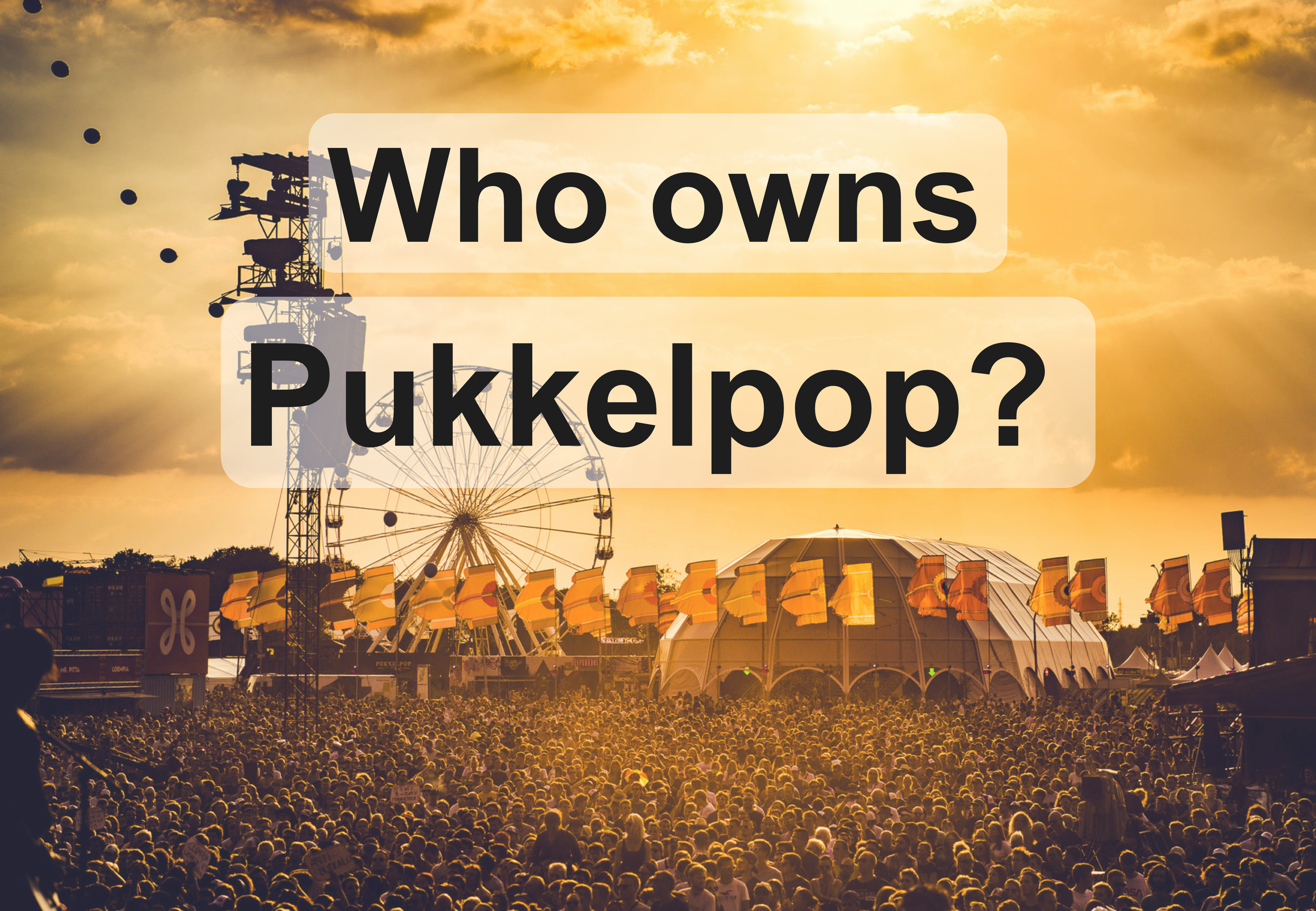
Pukkelpop remains Pukkelpop. But for how long?
Hopefully that won't happen.
At first glance, the reports suggest that Pukkelpop will NOT fully end up in the hands of Live Nation after all, now that the Belgian Competition Authority has looked into the matter.
The current deal: for 10 years (extendable by 5 years), Live Nation will only receive the economic value, without any say in decisions. Operations therefore remain in the hands of Chokri Mahassine, the founder.
But after that... full ownership is simply transferred to Live Nation, which also owns Rock Werchter, Graspop, Lotto Arena and AFAS Dome.
Is the government just passing the hot potato?
Or is it a Live Nation hack to avoid a lengthy procedure?
Or a way to let off steam regarding Live Nation's much-discussed dominant position in the Belgian festival sector?
We see it all more as temporary conditions imposed until Pukkelpop DOES end up fully in Live Nation's hands.
"Pukkelpop will simply remain Pukkelpop," they say.
But for how much longer?
Because good intentions and fine promises... are not yet structure.
If you want to know why ownership matters: look at KKR
So we looked a little further. Because the story of the 'takeover' of Pukkelpop is a sensitive one. Being 'owned' by a vehicle with different goals and values is really NOT without risk.
So let's zoom in on one of the most notorious owners of no fewer than 80 music festivals: KKR (Kohlberg Kravis Roberts), a controversial American investment firm that in 2024 put 1.3 billion euros on the table for entertainment company Superstruct, thereby gaining a controlling stake in dozens of festivals such as Sónar, Zwarte Cross, Boiler Room, DGTL Amsterdam and Defqon.
At several festivals, the tension quickly became visible: artists pulled out, threatened a boycott, and the organizations publicly distanced themselves from KKR.
The reasons for the discontent with KKR were its interests in occupied territories, its activities in fossil fuels and the tobacco industry, and its aggressive, financially driven acquisition strategy.
The Zwarte Cross festival even said:
"We distance ourselves from the unethical practices of the wicked stepmother we did not choose."
These festivals hoped their vision and cultural values would survive, but they had no say over who owned them or what that owner invested in elsewhere.
One of the apparent bright spots in this story was the well-known Hungarian Sziget Festival, which also fell into KKR's hands in 2024. Because the financial outlook was too thin, founder Károly Gerendai managed to buy the festival back (?), thereby safeguarding its soul and allowing the legendary festival to escape shareholder value maximization.
Although there still seems to be contractual uncertainty there as to whether it is actually more of a fifteen-year licensing fee...
Who owns the owner?
This Pukkelpop saga shows it once again: we rarely ask questions about ownership.
And yet it quietly shapes... everything.
Who holds power, how decisions are made, what gets priority, and ultimately what endures.
Compared to KKR, Pukkelpop will hopefully end up with a less 'greedy' shareholder in Live Nation.
But whose hands will Live Nation itself be in within 1, 5 or 10 years???
And for us, that's the crux of it.
Good intentions and fine promises... are not structure.
What if the mission is structurally protected?
That's why we write about this, and why Steward Ownership principles can truly make a difference here.
*️⃣ With ultimate control always in the hands of engaged steward-owners. Not for sale, not inheritable.
*️⃣ And profits that are guaranteed to flow back into the festival's mission. Not extracted to America or to the shareholder.
And yes, equally balanced with fair, risk-adequate compensation for founders and investors.
That is steward ownership.
On the one hand a fast-growing movement, on the other hand there are many long-established or large steward-owned examples such as De Efteling, The Guardian, Patagonia, Signal and Ecosia.
They can be guaranteed to:
steer for the long term
always in service of their mission
independent of short-term shareholder value
and are not for sale
And all of that anchored in their legal DNA.
No cash cow...
No tradeable commodity...
We wish it for every festival.
And let's hope Pukkelpop escapes that fate after all.
#BecauseOwnershipMatters